
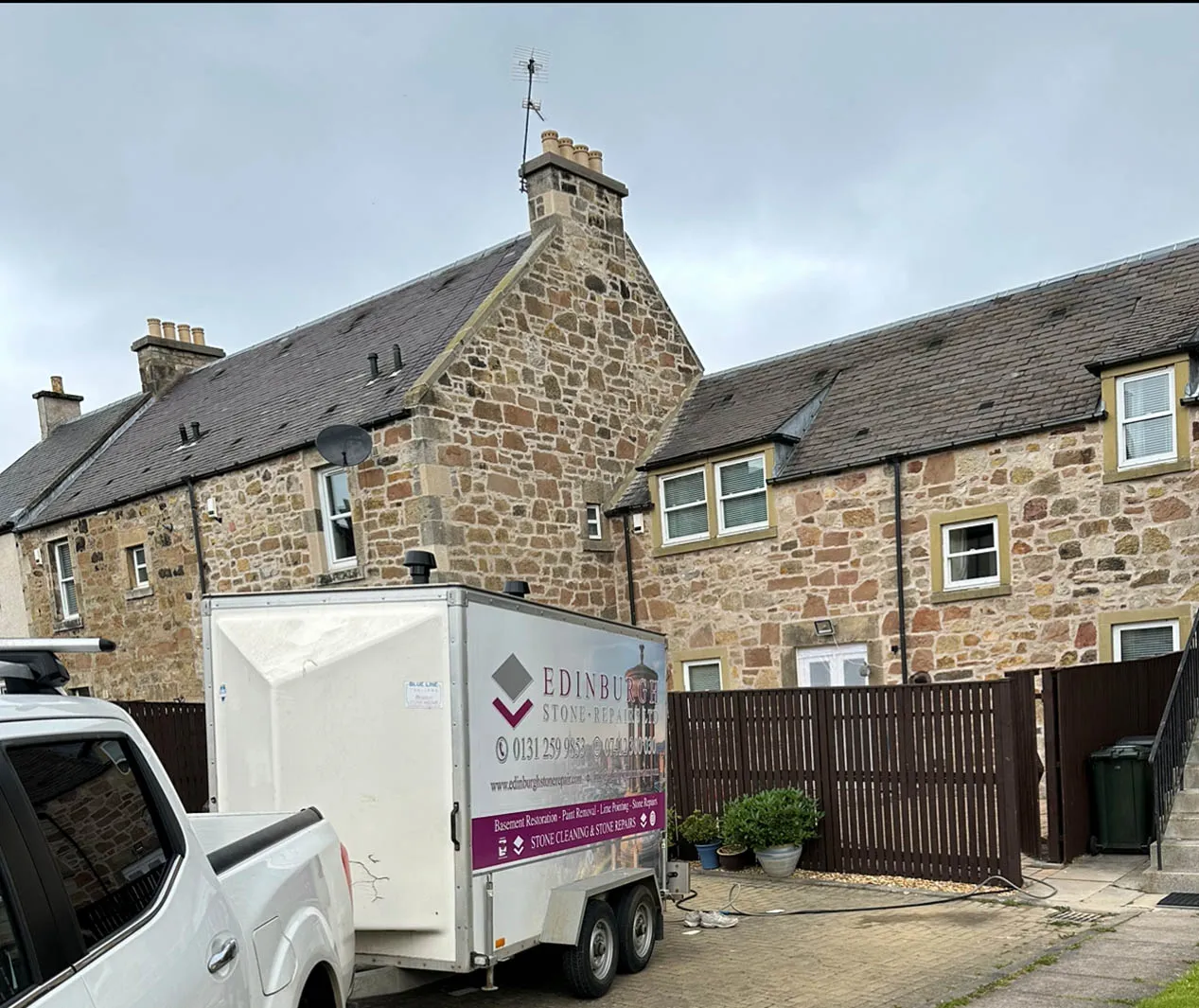
The use of Portland cement for repointing the joints of old stone structures and walls can cause decay. Before 1919, buildings did not rely on such materials to seal walls and exclude moisture: the permeable lime mortars widely used for older walls allowed them to ‘breathe’.
Traditional lime mortar pointing weathers back to the stage where repointing is needed. But if this is done with impervious cement, the sandstones themselves erode in preference, as they become the most permeable part of the wall and suffer the greatest frost and salt action.
Strong cement mortars also develop hairline cracks, from shrinkage or, with old buildings, from movement on shallow foundations. Lime mortar is a better material, allowing moisture to escape from the building correctly, and any minor cracks that do develop will self-heal. Remember too that the modern forms of joint finish associated with cement can form ledges that trap water.
What should I use to remove cement pointing?
We suggest using hand tools — a hammer and chisel, along with a pick — to rake back the mortar joints 20–25mm for a new application of lime mortar. Disc cutters can speed up the work if extreme care is taken not to damage the stonework in the process.
What should we replace the cement pointing with?
On buildings throughout Edinburgh we suggest using a soft lime mortar, such as Saint-Astier natural hydraulic lime mortar — a weaker and more permeable lime mortar that matches the colour, texture and profile of any surviving lime pointing.